
Choosing the Right Loader: Lift Path, ROC, and Brand Comparison Explained
Not all loaders are built the same. Choosing the right skid steer or track loader comes down to more than just brand preference. Factors like lift path, rated operating capacity (ROC), and terrain play a big role in determining which machine will perform best for your work. Kubota and Bobcat both offer strong lineups that fit a wide range of jobs. This guide breaks down the differences between vertical and radial lift paths, provides Kubota and Bobcat performance attributes, and helps you decide which loader fits your needs best.
Understanding Lift Paths: Radial vs. Vertical
It’s important to understand how lift paths affect performance:
Vertical lift loaders are designed to raise the bucket straight up before reaching out. That means they offer higher lift heights and more stability when lifting heavy loads into trucks or hoppers. They’re ideal for tasks that require loading materials at a consistent height, like construction, agriculture, or large-scale landscaping.
Radial lift loaders on the other hand, follow a arc-shaped path as they lift. This design gives them better breakout force and reach at mid-height, making them great for digging, grading, and working close to the ground. They typically come with fewer moving parts, which can make them easier to maintain over time.
What Rated Operating Capacity (ROC) Really Means
Rated Operating Capacity measures how much weight a loader can safely lift. It’s a key factor for both productivity and safety. A higher ROC means you can handle heavier loads, but it often comes with more machine weight and cost.
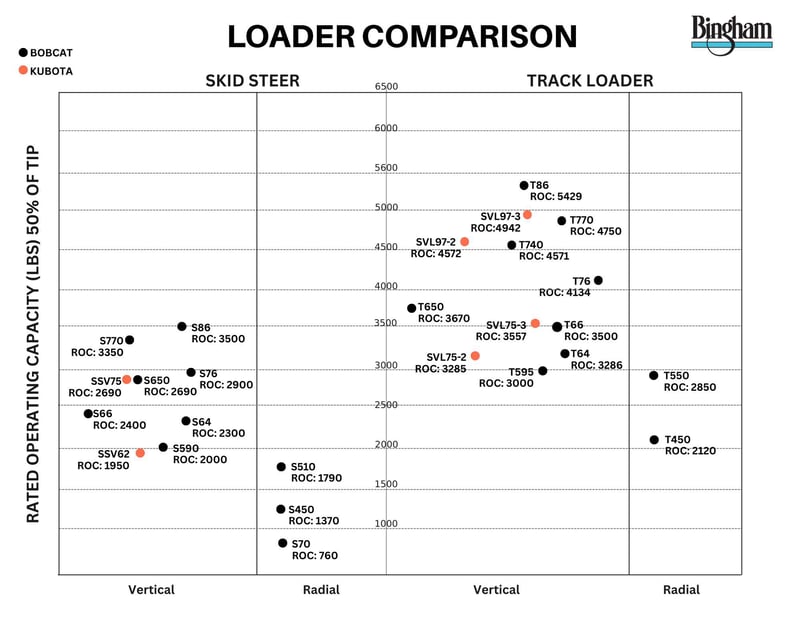
The chart below compares Kubota and Bobcat loaders by lift type and ROC. Vertical lift loaders generally dominate the higher ROC range, while radial lift models remain the go-to choice for ground-level applications and compact worksites.
Choosing the Right Loader for Your Work
Finding the right loader starts with knowing how and where you work. Skid steers are a great choice for firm or paved surfaces. They’re affordable, easy to maintain, and built for tight turns, which makes them ideal for urban or confined job sites. Track loaders perform best on soft, muddy, or uneven ground, offering a smoother ride, more traction, and less ground disturbance.
If your work takes you from pavement to dirt, a track loader gives you the flexibility to handle both. For jobs that stay on hard surfaces, a skid steer is often the more practical and cost-effective choice. Landscapers tend to prefer skid steers for grading and digging, while construction crews count on track loaders for heavy lifting and truck loading. On farms and ranches, track loaders deliver steady traction and dependable performance across changing terrain.
When it comes to brand, both Kubota and Bobcat have built strong reputations. Kubota loaders are known for their durability, operator comfort, and reliable performance year after year. They’re designed to run efficiently and minimize downtime so you can stay focused on the job.
Bobcat equipment is recognized for its versatility and innovation. Their lineup includes a variety of models and configurations to fit nearly any application, from light-duty projects to tough construction work.
Both brands offer dependable machines that work hard in the field. The right choice comes down to what matters most for your operation, whether that’s power, traction, stability, or overall control.
What It Comes Down To
When comparing Kubota vs. Bobcat loaders, it’s not about which brand is “better,” it’s about which model fits your operation best. Understanding lift paths, ROC, and the type of surface you’ll be working on are the first steps to making the right choice. Here at Bingham, we have made it our mission to provide not just one option but just about every option to ensure there is one machine for every customer. Whether you're in the market for new, used, or rental equipment, we deliver the best options for your operation, budget, and long-term goals.